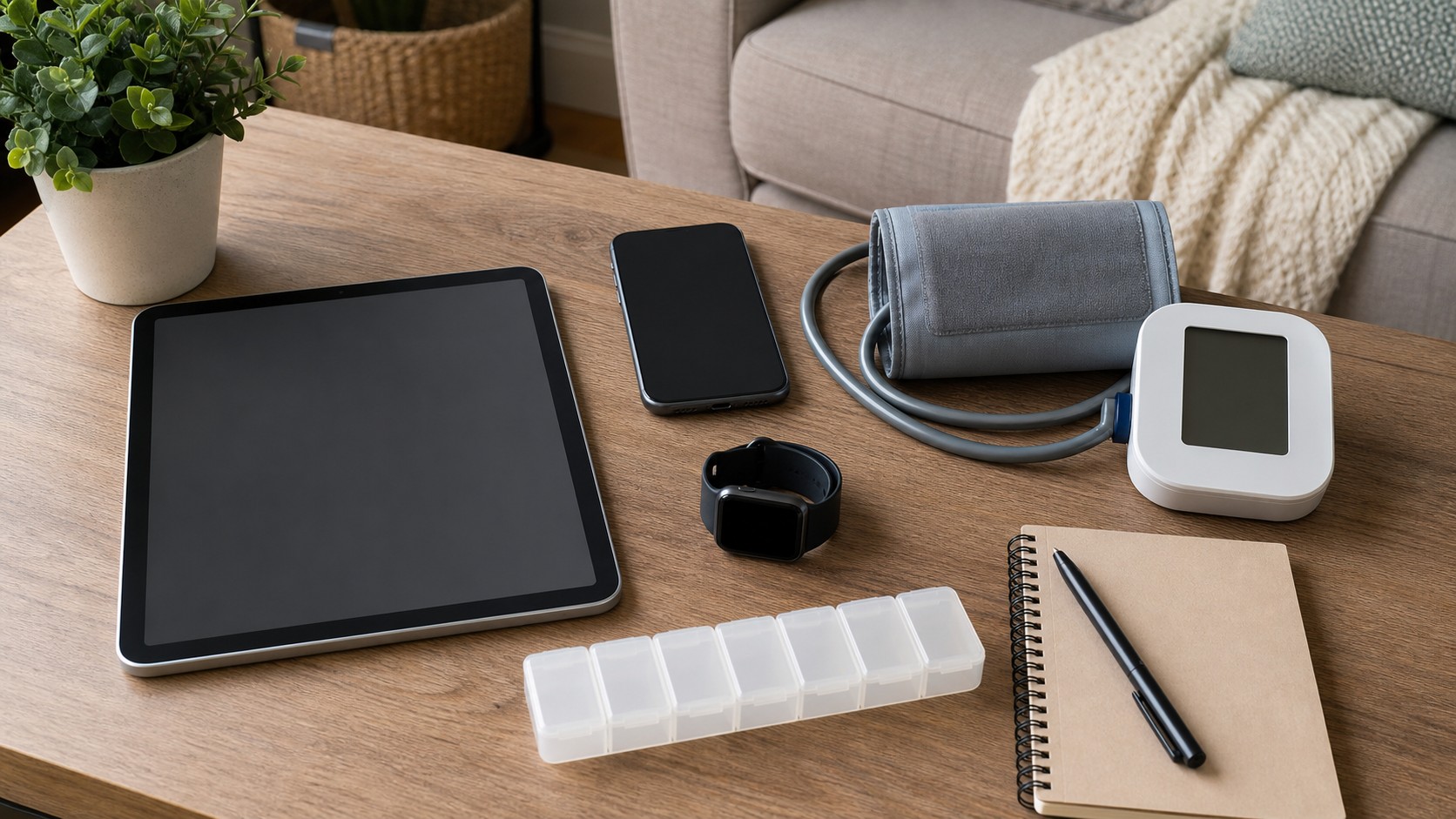
Better Chronic Care Depends on Daily Follow-Through
Best Digital Tools for Chronic Condition Management in 2026 is best understood through the needs of buyers and patients comparing remote monitoring, medication, education, and care coordination tools. The topic is not just a software feature or a new operating model. It is about whether care becomes easier to adjust, easier to understand, and easier to complete when patient needs shift. A useful approach keeps clinical responsibility, patient preference, privacy, equity, and measurable follow-through in view from the beginning.
A: chronic-tools-a1 They should define the patient need, care decision, responsible role, and measurable outcome.
A: chronic-tools-a2 No. It should support accountable people who remain responsible for care decisions.
A: chronic-tools-a3 Patient needs change, and the care plan should be able to change with them.
A: chronic-tools-a4 The biggest risk is creating alerts, messages, or tasks that nobody clearly owns.
A: chronic-tools-a5 Privacy should be plain, limited to care purposes, and easy for patients to understand.
A: chronic-tools-a6 Escalation is needed when symptoms, readings, safety concerns, or uncertainty exceed the digital pathway.
A: chronic-tools-a7 Patients should notice clearer next steps, fewer gaps, and easier ways to reach help.
A: chronic-tools-a8 Teams should compare access, use, and outcomes across meaningful patient groups.
A: chronic-tools-a9 Evidence is useful when it reflects real workflows, patient populations, and follow-through.
A: chronic-tools-a10 Use digital systems where they make care clearer, safer, and more accountable.
Start With the Care Decision
A useful system begins with the decision that needs to improve, not with a dashboard or app feature. Chronic care depends on ordinary routines, so the design has to work on difficult weeks as well as ideal ones. Leaders should look at how the step works for patients with limited time, limited technology access, changing symptoms, or multiple conditions. That practical lens keeps the system focused on better care rather than a more elaborate process.
The practical question is whether the pathway, chronic care tool, or engagement workflow helps the right person act with better timing and context. Chronic care depends on ordinary routines, so the design has to work on difficult weeks as well as ideal ones. Leaders should look at how the step works for patients with limited time, limited technology access, changing symptoms, or multiple conditions. That practical lens keeps the system focused on better care rather than a more elaborate process.
When the decision is clear, teams can define ownership, escalation, patient communication, and measurement before the technology becomes hard to unwind. Chronic care depends on ordinary routines, so the design has to work on difficult weeks as well as ideal ones. Leaders should look at how the step works for patients with limited time, limited technology access, changing symptoms, or multiple conditions. That practical lens keeps the system focused on better care rather than a more elaborate process.
For the chronic tools angle, the important test is whether the workflow creates a clearer handoff between patient information and care-team action. When that handoff is visible, teams can improve it. When it is hidden, the patient often experiences the problem as silence, delay, or conflicting instructions.
Signals Need Context
Health signals rarely explain themselves. Chronic care depends on ordinary routines, so the design has to work on difficult weeks as well as ideal ones. Leaders should look at how the step works for patients with limited time, limited technology access, changing symptoms, or multiple conditions. That practical lens keeps the system focused on better care rather than a more elaborate process.
Symptoms, home readings, missed visits, medication changes, patient goals, social barriers, and clinician judgment all need to be interpreted together. Chronic care depends on ordinary routines, so the design has to work on difficult weeks as well as ideal ones. Leaders should look at how the step works for patients with limited time, limited technology access, changing symptoms, or multiple conditions. That practical lens keeps the system focused on better care rather than a more elaborate process.
The best digital systems keep context close to the signal so a person is not reduced to an alert, score, or reminder. Chronic care depends on ordinary routines, so the design has to work on difficult weeks as well as ideal ones. Leaders should look at how the step works for patients with limited time, limited technology access, changing symptoms, or multiple conditions. That practical lens keeps the system focused on better care rather than a more elaborate process.
Adaptation Is the Core Value
Care improves when the plan can change as the patient changes. Chronic care depends on ordinary routines, so the design has to work on difficult weeks as well as ideal ones. Leaders should look at how the step works for patients with limited time, limited technology access, changing symptoms, or multiple conditions. That practical lens keeps the system focused on better care rather than a more elaborate process.
That may mean a different outreach cadence, a medication review, more education, a specialist referral, or a return to in-person evaluation. Chronic care depends on ordinary routines, so the design has to work on difficult weeks as well as ideal ones. Leaders should look at how the step works for patients with limited time, limited technology access, changing symptoms, or multiple conditions. That practical lens keeps the system focused on better care rather than a more elaborate process.
Adaptive systems are valuable because they make those adjustments visible and intentional instead of leaving them to chance. Chronic care depends on ordinary routines, so the design has to work on difficult weeks as well as ideal ones. Leaders should look at how the step works for patients with limited time, limited technology access, changing symptoms, or multiple conditions. That practical lens keeps the system focused on better care rather than a more elaborate process.
For the chronic tools angle, the important test is whether the workflow creates a clearer handoff between patient information and care-team action. When that handoff is visible, teams can improve it. When it is hidden, the patient often experiences the problem as silence, delay, or conflicting instructions.
Workflow Fit Protects Staff Time
Even a well-designed care model can fail if it adds unclear tasks to an already busy team. Chronic care depends on ordinary routines, so the design has to work on difficult weeks as well as ideal ones. Leaders should look at how the step works for patients with limited time, limited technology access, changing symptoms, or multiple conditions. That practical lens keeps the system focused on better care rather than a more elaborate process.
Clinicians, nurses, pharmacists, care managers, and support staff need to know what the system expects from them and what it handles automatically. Chronic care depends on ordinary routines, so the design has to work on difficult weeks as well as ideal ones. Leaders should look at how the step works for patients with limited time, limited technology access, changing symptoms, or multiple conditions. That practical lens keeps the system focused on better care rather than a more elaborate process.
Patients Need Clarity
Patients judge digital care by whether it helps them understand what to do next. Chronic care depends on ordinary routines, so the design has to work on difficult weeks as well as ideal ones. Leaders should look at how the step works for patients with limited time, limited technology access, changing symptoms, or multiple conditions. That practical lens keeps the system focused on better care rather than a more elaborate process.
A reminder, plan, pathway, or message should reduce uncertainty rather than creating another place to check. Chronic care depends on ordinary routines, so the design has to work on difficult weeks as well as ideal ones. Leaders should look at how the step works for patients with limited time, limited technology access, changing symptoms, or multiple conditions. That practical lens keeps the system focused on better care rather than a more elaborate process.
Plain language and channel choice matter as much as technical sophistication. Chronic care depends on ordinary routines, so the design has to work on difficult weeks as well as ideal ones. Leaders should look at how the step works for patients with limited time, limited technology access, changing symptoms, or multiple conditions. That practical lens keeps the system focused on better care rather than a more elaborate process.
For the chronic tools angle, the important test is whether the workflow creates a clearer handoff between patient information and care-team action. When that handoff is visible, teams can improve it. When it is hidden, the patient often experiences the problem as silence, delay, or conflicting instructions.
Equity Must Be Measured
Digital care can widen gaps if it assumes every patient has the same access, language, health literacy, device confidence, and schedule flexibility. Chronic care depends on ordinary routines, so the design has to work on difficult weeks as well as ideal ones. Leaders should look at how the step works for patients with limited time, limited technology access, changing symptoms, or multiple conditions. That practical lens keeps the system focused on better care rather than a more elaborate process.
Teams should measure who benefits, who drops off, and who still needs phone, community, or in-person support. Chronic care depends on ordinary routines, so the design has to work on difficult weeks as well as ideal ones. Leaders should look at how the step works for patients with limited time, limited technology access, changing symptoms, or multiple conditions. That practical lens keeps the system focused on better care rather than a more elaborate process.
Privacy Shapes Trust
These systems often touch sensitive symptoms, home readings, medication routines, behavioral patterns, and communication preferences. Chronic care depends on ordinary routines, so the design has to work on difficult weeks as well as ideal ones. Leaders should look at how the step works for patients with limited time, limited technology access, changing symptoms, or multiple conditions. That practical lens keeps the system focused on better care rather than a more elaborate process.
Patients deserve to know what is collected, who sees it, how long it remains, and how it supports their care. Chronic care depends on ordinary routines, so the design has to work on difficult weeks as well as ideal ones. Leaders should look at how the step works for patients with limited time, limited technology access, changing symptoms, or multiple conditions. That practical lens keeps the system focused on better care rather than a more elaborate process.
Trust is easier to maintain when data use is limited, explainable, and tied to a real care purpose. Chronic care depends on ordinary routines, so the design has to work on difficult weeks as well as ideal ones. Leaders should look at how the step works for patients with limited time, limited technology access, changing symptoms, or multiple conditions. That practical lens keeps the system focused on better care rather than a more elaborate process.
For the chronic tools angle, the important test is whether the workflow creates a clearer handoff between patient information and care-team action. When that handoff is visible, teams can improve it. When it is hidden, the patient often experiences the problem as silence, delay, or conflicting instructions.
Measurement Should Go Beyond Usage
A system can generate many messages, alerts, or logins without improving health. Chronic care depends on ordinary routines, so the design has to work on difficult weeks as well as ideal ones. Leaders should look at how the step works for patients with limited time, limited technology access, changing symptoms, or multiple conditions. That practical lens keeps the system focused on better care rather than a more elaborate process.
The Best Future Is Practical
The strongest digital care programs are not the flashiest ones. Chronic care depends on ordinary routines, so the design has to work on difficult weeks as well as ideal ones. Leaders should look at how the step works for patients with limited time, limited technology access, changing symptoms, or multiple conditions. That practical lens keeps the system focused on better care rather than a more elaborate process.
They are the ones that make care easier to follow, easier to coordinate, and less likely to lose the patient between steps. Chronic care depends on ordinary routines, so the design has to work on difficult weeks as well as ideal ones. Leaders should look at how the step works for patients with limited time, limited technology access, changing symptoms, or multiple conditions. That practical lens keeps the system focused on better care rather than a more elaborate process.
A practical program also has to respect the ordinary pressure around healthcare work. Patients may be managing transportation, family duties, cost worries, changing symptoms, and competing instructions from more than one clinician. Staff may be balancing full schedules, documentation, portal messages, and follow-up tasks. Digital care is most useful when it reduces that confusion rather than adding another channel with unclear expectations.