
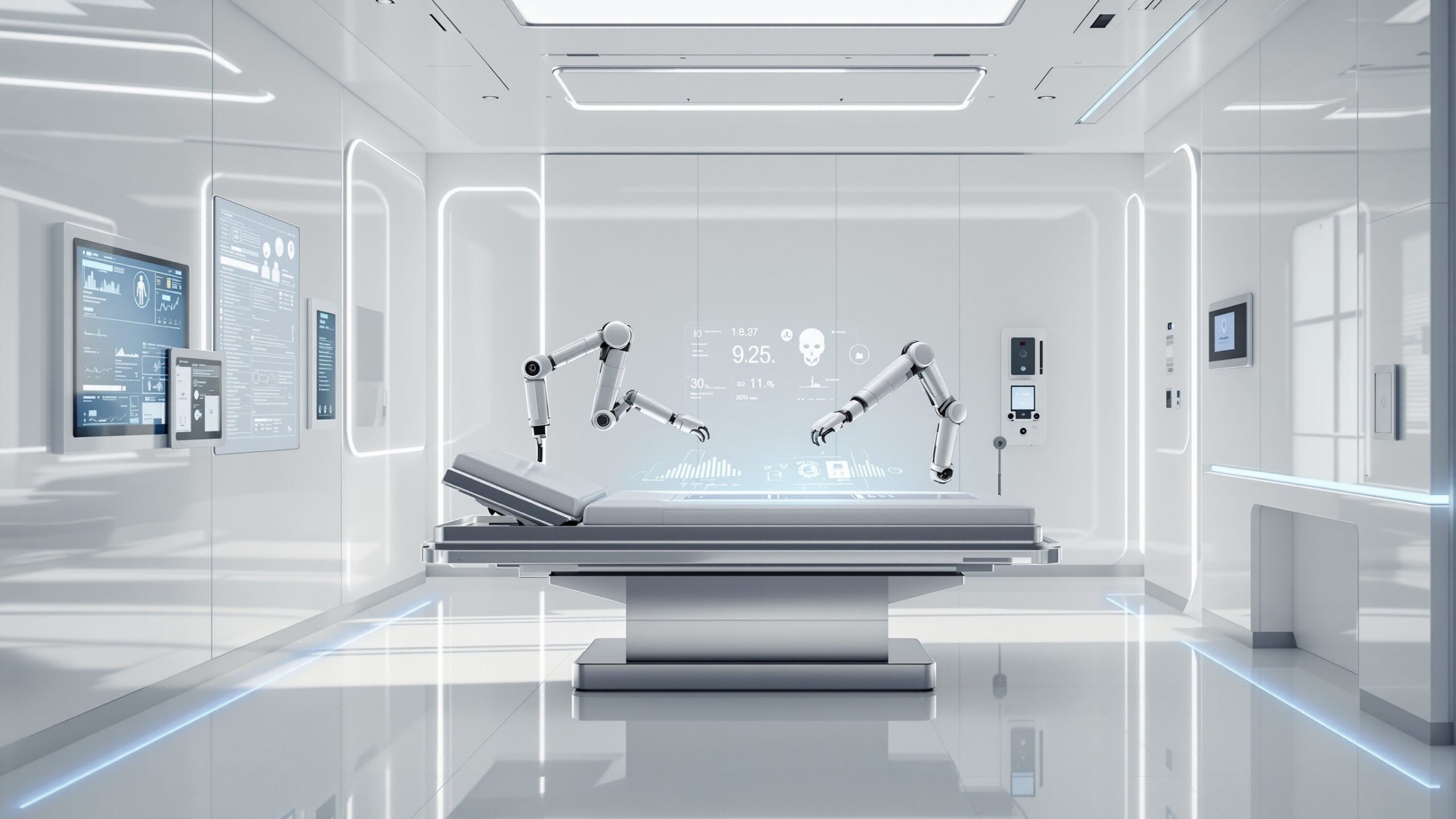
AI Hospital Infrastructure is redefining what modern healthcare looks and feels like—quietly transforming hospitals into intelligent, responsive ecosystems where technology works seamlessly alongside human expertise. This rapidly evolving space explores how artificial intelligence is embedded into the very foundation of care delivery, from smart patient rooms and predictive maintenance systems to automated workflows and real-time data integration across entire facilities. In AI Health Street, this sub-category brings together forward-thinking insights, deep dives, and practical guides focused on how hospitals are being reimagined for efficiency, precision, and better patient outcomes. Discover how AI-driven logistics streamline operations behind the scenes, how intelligent monitoring enhances safety and recovery, and how adaptive environments respond dynamically to both patients and healthcare professionals. Whether you’re exploring next-generation hospital design, curious about AI-powered clinical support systems, or seeking to understand how infrastructure decisions shape the future of care, this collection offers a compelling look at where innovation meets healing. Welcome to the backbone of tomorrow’s healthcare experience.
A: It is the connected mix of data systems, networks, platforms, devices, and governance that allows AI to function safely in hospital settings.
A: Because AI tools work better when records, imaging, labs, and operational systems can share usable information.
A: Yes. Many use hybrid models that combine local systems, edge processing, and cloud services.
A: Legacy systems, inconsistent data, and workflow resistance are among the biggest challenges.
A: No. It is designed to support care teams with insights, prioritization, and automation, not replace clinical judgment.
A: Hospitals manage sensitive patient data and connected devices, making security essential for trust and safety.
A: Clean data, connected systems, reliable networks, governance processes, and staff-ready workflows all help.
A: Common starting points include imaging support, documentation help, predictive alerts, and operations optimization.
A: It happens when an AI model becomes less accurate over time as data patterns or clinical conditions change.
A: To create faster, safer, more coordinated, and more efficient care environments for patients and staff.