Healthcare Becomes More Connected When AI Can Interpret Several Forms of Evidence
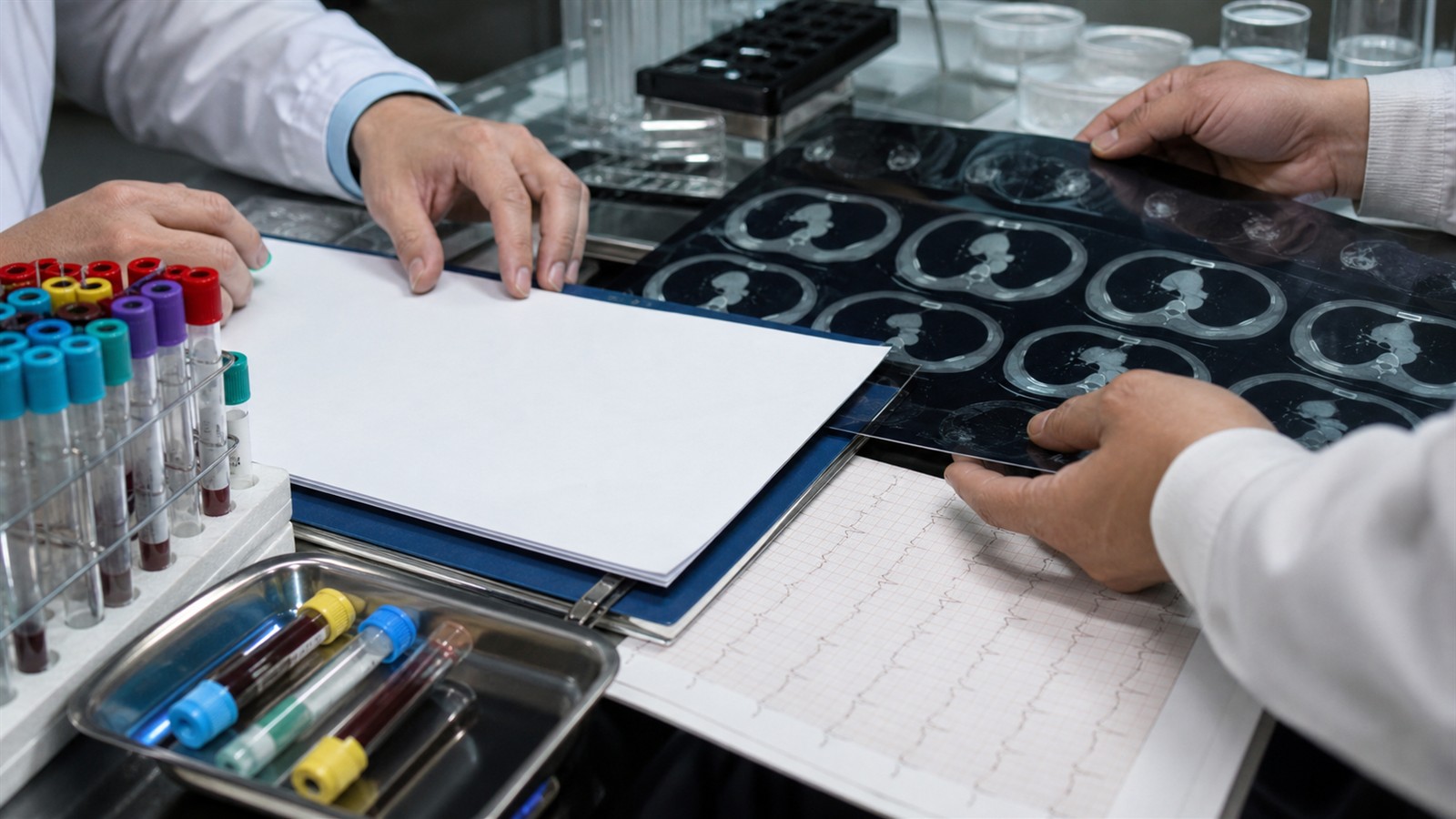
Multimodal AI is transforming healthcare by helping systems analyze images, language, measurements, signals, and other data together instead of treating each source as a separate island. This matters because clinical decisions rarely depend on one input. A radiology finding may be important only in light of symptoms and laboratory trends; a deterioration signal may become urgent when medication changes and nursing observations point in the same direction. Multimodal systems can support earlier recognition, more complete summaries, and better coordinated workflows. Yet the transformation is not automatic. Combining sources expands technical complexity, privacy exposure, and opportunities for hidden bias. The most valuable changes occur when the technology reduces fragmentation around a specific decision while keeping original evidence, uncertainty, and human accountability visible.
A: Imaging, oncology, monitoring, and record summarization are prominent, though maturity varies by task.
A: No. Focused single-source tools remain preferable when extra data adds little value.
A: It can assemble relevant evidence and prioritize cases before manual review is complete.
A: It may create additional alerts, verification work, or complex explanations.
A: They can support navigation, but important decisions require access to original evidence.
A: Patients with fewer tests or fragmented records may receive weaker or unavailable outputs.
A: Yes, when they influence staffing, capacity, outreach, or access to services.
A: The disagreement should be visible and reviewed rather than hidden inside one score.
A: No. It may reduce some ambiguity while introducing new dependencies and errors.
A: Connect the evidence needed for a defined decision while preserving human review and accountability.
Transformation Starts by Reducing Information Fragmentation
Healthcare professionals often spend substantial effort locating information before they can interpret it. Images live in an archive, medications in another application, outside reports in scanned files, and patient observations in narrative notes. Fragmentation delays decisions and increases the chance that relevant evidence is missed. Multimodal AI can help by retrieving, aligning, and summarizing selected sources around a clinical question. This may transform care even when the final predictive gain is modest, because the system reduces search and makes disagreement visible. The effect should be measured carefully. A summary that saves time but introduces unsupported statements may create more risk than benefit. A retrieval tool that consistently omits outside records may reinforce a false impression of completeness. Transformation therefore starts with transparent assembly: show what was found, where it came from, when it was created, and what remains unavailable. Systems should allow users to open original records and correct mismatches. These capabilities may be less dramatic than a fully autonomous diagnostic model, but they address a daily operational problem and create a safer foundation for more advanced assistance.
Diagnostic Teams Can See a More Complete Case
Specialists often interpret one type of evidence while relying on other teams for context. Radiologists examine images, pathologists study tissue, and laboratory professionals validate measurements. Multimodal AI can bring selected context into those workflows. A model may connect a scan with prior imaging, symptoms, and laboratory results, or link a pathology slide with molecular findings and treatment history.
The transformation is not that one model replaces several specialists. It can help them focus on relationships across sources that are difficult to review consistently at scale. A concerning image region may be prioritized because other evidence supports urgency. A finding that looks ambiguous alone may become less uncertain when a related biomarker is present. Professionals still inspect the original material and determine whether the connection is clinically plausible.
This connected view may reduce diagnostic delay, especially when records are distributed across systems. It can also create false confidence if sources are mismatched or one modality dominates. Clinical deployments need clear displays of what data was used, when it was collected, and which evidence was unavailable.
Hospital Monitoring Can Combine Weak Warning Signals
Deterioration often appears through several modest changes rather than one dramatic measurement. Multimodal monitoring can combine vital-sign trends, laboratory changes, medications, nursing documentation, and prior conditions. The system may recognize a pattern that deserves review before a traditional threshold is crossed.
Better detection is only one part of transformation. Alerts must fit staffing and escalation procedures. A model that adds text and waveform data may become more accurate but slower, harder to maintain, or more difficult to explain. Hospitals need to test whether the complete system improves response time and outcomes without overwhelming teams with extra notifications.
Cancer Care Is Becoming More Integrated
Oncology generates many data types: radiology, pathology, genomic testing, laboratory results, treatment records, and longitudinal notes. Multimodal AI can help organize these sources for diagnosis, staging, therapy selection, and response assessment. A system might relate tissue morphology to molecular alterations or compare imaging change with treatment exposure and reported symptoms.
Integration can support tumor boards by preparing a structured view of relevant evidence. It may identify missing tests, highlight conflicting findings, or retrieve similar cases. This can reduce clerical search, leaving specialists more time to discuss interpretation and patient preferences.
Cancer applications also show why caution is necessary. Genomic testing and specialized imaging are not equally available. A model may perform best for patients who receive extensive workups and worse for those with fragmented care. Evaluation should examine whether the system improves decisions for the full intended population rather than only for complete, data-rich cases.
Clinical Documentation Can Become More Useful
Language models can summarize notes, while multimodal systems can ground summaries in measurements, medications, and images. A discharge summary could incorporate the hospital course, major results, and follow-up needs. A clinician reviewing a long record might receive an organized timeline with links to source evidence. The goal is not merely shorter text but a more reliable path through complex information.
Remote Care Can Connect Devices With Patient Reports
Home monitoring produces measurements without the full context of a clinic visit. Combining device trends with symptoms, medication changes, activity, and recent encounters can make those readings more meaningful. A weight increase in a patient with heart failure may deserve different attention when shortness of breath and missed medication are also reported.
Multimodal remote care may personalize the frequency and type of outreach. Stable patterns can support less intrusive monitoring, while concerning combinations prompt a call. Programs must explain who reviews data, how quickly, and what patients should do when they feel unwell. A connected device is not a substitute for emergency evaluation.
Research and Clinical Trials Can Find Better Matches
Clinical trial eligibility can depend on diagnosis, stage, biomarkers, prior treatments, laboratory thresholds, and narrative criteria. Multimodal systems can search structured records and notes to identify possible matches, reducing manual review. Researchers can also use combined data to study disease subtypes that are difficult to see in one source.
Candidate identification is not enrollment. Records may be outdated, criteria may require interpretation, and patients need informed consent. Systems should show why a match was suggested and allow research staff to verify each condition. They should also be evaluated for whether certain populations are systematically overlooked because their data is less complete.
In discovery work, multimodal models may connect molecular information with imaging or clinical outcomes. These associations can generate hypotheses but do not establish causation. Independent datasets and prospective studies remain necessary before a research pattern becomes a care recommendation.
Healthcare Operations May Become Less Fragmented
Operational decisions also draw from varied sources. Bed demand, staffing, procedure schedules, clinical acuity, and discharge barriers can be modeled together. Multimodal or multi-source systems may help teams anticipate capacity and coordinate resources. Their impact depends on whether predictions reach the people who can change plans.
Administrative uses need fairness review. A model that uses documentation intensity as a proxy for need may allocate resources toward patients whose care is already well documented. Social and access factors should be interpreted as signals to provide support, not reasons to deny service. The transformation should reduce barriers rather than automate historical scarcity.
The Real Transformation Is a New Standard for Context
Multimodal AI raises expectations for what a useful healthcare model should consider. Single-source tools will remain appropriate for focused tasks, but complex decisions may increasingly require systems that acknowledge the broader case. This does not mean every source must enter one enormous model. Sometimes a coordinated set of specialized tools with clear handoffs is easier to validate and operate.
Success requires investment in interoperability, identity matching, event timing, and source quality. It also requires interfaces that let users inspect original evidence rather than accept a synthesized answer. Missing modalities, conflicts, and confidence should be visible. Data access and model performance should be monitored across patient groups.
Modern healthcare is transformed when multimodal AI makes fragmented evidence easier to interpret and act upon. The responsible goal is not maximum data fusion. It is clinically useful connection: the right sources aligned for the right decision, delivered in a workflow where qualified people can question the result and improve the care that follows.
What Healthcare Leaders Should Require Before Scaling
Scaling a multimodal system requires more than purchasing access to a model. Leaders should require a precise intended-use statement, an inventory of mandatory and optional modalities, evidence from external settings, and performance under realistic missingness. They should know how patient identity is resolved across sources and how data timing prevents leakage. Contracts should provide visibility into model and preprocessing updates, support local monitoring, and define responsibilities during an incident. The organization needs an operational owner for every alert or recommendation and a process for users to report mismatched evidence. Pilot evaluation should include workflow time, false-alert burden, downstream testing, and patient outcomes rather than only technical accuracy. Equity review must examine whether required modalities are less available to certain groups and whether missing data changes service access. Privacy teams should evaluate whether combining sources creates new inferences or secondary uses beyond patient expectations. Infrastructure planning should cover storage, processing latency, downtime, and the retention of audit records. Training should teach clinicians what the system does when sources conflict or disappear. Finally, leaders should establish stopping rules. If data quality falls, model performance drifts, or the intervention fails to improve care, the system should be paused or revised. Responsible scaling is the ability to expand benefit while retaining the power to detect and contain harm.
How Patients Could Experience the Change
For patients, multimodal transformation may appear as fewer repeated questions, faster review of outside records, and care discussions that connect results across specialties. A patient with a complex condition may no longer need to explain the relationship among several reports because the care team receives an organized view with source links. Remote programs may respond to symptoms and measurements together rather than sending a generic message after one unusual reading. These gains can make care feel more coordinated and attentive.
The same technology can feel intrusive or opaque if patients do not know which sources are combined or how the result affects care. People should be told when a multimodal system materially influences a decision and should have a route to correct mismatched records. Optional device or genomic data should not quietly become a requirement for ordinary service. Explanations should avoid presenting the model as a single all-knowing observer; it sees only the inputs it received. Patient experience measures can reveal whether integration reduces burden or creates new confusion. Transformation is successful when connected evidence supports a clearer relationship with the care team, not when the patient becomes invisible behind a larger data profile.
The Transformation Test
Ask whether the system connects evidence that clinicians previously struggled to assemble.
Measure whether that connection changes timing, quality, burden, or outcomes.
Confirm that the gain remains when records are incomplete and that patients can still understand who is responsible for the decision.
A Durable Change
The durable change is not a one-time demonstration. It is an operating model in which connected evidence remains accurate, timely, inspectable, and useful as clinical practice and technology evolve.