The Best Workout App Has to Fit the Room
Your personalized workout looks excellent until the second exercise requires a machine your gym does not have. That mismatch reveals more than the length of the app’s exercise library: it shows whether personalization accounts for the conditions in which you actually train. The best AI fitness apps should fit your equipment, experience, available time, and feedback, while making their recommendations easy to understand and change. A strength-training assistant, an adaptive running plan, and a guided bodyweight program solve different problems. Comparing them as if they were interchangeable can leave you paying for the wrong kind of support. Start with the training task you want help with, then examine how each product handles ordinary disruptions, progression, instruction, and cost before letting a polished plan shape your week.
A: Compare resistance planning, exercise history, equipment handling, editing, and instruction for your experience level. Use a realistic trial session to assess the actual training job rather than choosing solely because a product advertises AI.
A: Not automatically. Runna focuses on running and includes strength support, while a dedicated resistance planner may organize a different primary task. Compare current features against the specific lifting history, control, and progression you need.
A: Not necessarily. It can be an equivalent used to compare a longer subscription. Check the full charge, renewal period, purchase channel, and cancellation terms shown for your actual offer before committing.
A: No. Test what changes after you alter equipment, available time, missed sessions, or feedback. Meaningful adaptation should produce a more suitable plan, rather than only a personalized greeting or a longer explanation.
A: Review and complete an appropriate realistic session, log what actually happened, and inspect the next suggestion. Include ordinary constraints such as crowded equipment or limited time, and compare the help received with the editing effort required.
A: No. A demonstration shows a movement but does not necessarily assess your own execution. Seek appropriate instruction or professional input when needed, especially when the movement is unfamiliar or conflicts with your circumstances.
A: Do not let an estimate override symptoms or relevant professional advice. Adjust or stop as appropriate and seek assessment when needed; the app may infer recovery from limited signals that do not explain the pain.
A: Test substitutions during the trial and see whether they preserve a workable session. If replacing one occupied station requires extensive rebuilding every time, a different planner or simpler routine may fit the setting better.
A: No. Connect sources that serve a clear training purpose and review the information handling involved. More inputs do not automatically improve the plan, particularly when maintaining or interpreting them adds burden.
A: When it supports your routine reliably with less correction, cost, or attention. A consistent plan you can understand and adapt appropriately may be more useful than a complex service whose suggestions you repeatedly have to rebuild.
Choose the Training Job Before the Software
| Training job | First candidate | Price comparison |
|---|---|---|
| Organizing resistance sessions around equipment and logged work | Fitbod | Website: $95.99 annually or $191.88 across twelve $15.99 monthly payments. |
| Following a running plan toward a running goal | Runna | Listed $119.99 annually or $239.88 across twelve $19.99 monthly payments. |
| Exploring guided training with alternative subscription periods | Freeletics Coach | Obtain the full current checkout charge for the selected Coach and renewal period. No like-for-like fixed US annual quote is established in this comparison. |
These are task-fit recommendations, not results from a head-to-head training trial. Fitbod’s adaptive exercise selection is a different capability from a running-plan workflow. An AI label is not required to make the running comparison useful; the ability to revise your actual sessions is the feature to inspect.
Some people need help selecting exercises and recording resistance work. Others want running sessions arranged around a target event, or short guided workouts that reduce the effort of deciding what to do. These are distinct needs. An app can be excellent at one and a poor fit for another without either conclusion being contradictory. Establish the activity you will actually perform before comparing feature lists.
Describe your practical setting in enough detail to rule out unsuitable options. A crowded commercial gym, an apartment with a pair of dumbbells, and a runner’s neighborhood each impose different constraints. Include available days, realistic session duration, and whether you can watch demonstrations while exercising. The best product for you is partly determined by how much negotiation its recommendations require before each session can begin.
The word AI does not reveal how a recommendation is made. A product may combine preset training logic, recorded performance, and generated explanations. Ask what information changes the plan and how quickly feedback is incorporated. A conversational interface that cannot alter an unsuitable workout is less useful than a simpler planner that handles your constraints consistently.
Fitbod Is a Candidate for Structured Resistance Training
Fitbod’s official information emphasizes personalized workouts, exercise tracking, and recommendations adjusted to equipment and goals. This makes it a relevant option for someone who wants help organizing resistance sessions rather than selecting a new video class every day. Its FAQ also describes support for updating equipment when traveling. Evaluate those features against the movements and facilities you actually use, not against an ideal gym. The Fitbod FAQ provides current details and platform information.
The listed website price, checked October 27, 2026, is $15.99 monthly or $95.99 annually. Regional, platform, and promotional prices may differ. The annual amount is a single commitment, not a promise that you can stop after any month and recover the rest. Compare the subscription with the amount of planning and tracking help you expect to use over a normal training period.
Keep Your Familiar Movements Portable
Portability belongs in the trial session, alongside substitutions and logging. Record one familiar movement, change the available equipment, and see whether the replacement preserves the intended training job. Then export or inspect the record: the original exercise, replacement, completed work, and date should remain distinguishable. Fitbod’s resistance workflow, Runna’s running focus, and Freeletics’ guided sessions should be assessed on their own terms. A tool loses practical value if changing a movement erases the history you need to discuss with a trainer.
Runna Addresses a Different Planning Problem
Runna focuses on personalized running plans, making it relevant to runners seeking an organized progression toward a goal. Its official site lists $19.99 per month or $119.99 per year, checked October 27, 2026. A runner should evaluate how the plan accommodates current experience, available training days, schedule changes, and the tools used to receive sessions. See Runna’s official site for current offerings. It should be compared against your running needs rather than treated as an interchangeable substitute for a gym-based resistance planner. An appropriate running schedule and a suitable strength program can complement one another, but the app that organizes one activity does not automatically solve the other.
For the running comparison, inspect the delivery experience rather than the calendar alone. A session may be well planned but difficult to follow on the device you intend to carry. Test how the relevant instructions reach you, whether changes are understandable, and how completed work is recorded. These practical details can determine whether the plan survives a normal training week, particularly when weather or work changes the time available for a run.
Do not select a target simply because the app offers a schedule for it. Your starting experience and available preparation time still matter. If the proposed workload feels disconnected from your current routine, revise the goal or seek suitable guidance before treating the calendar as a commitment. A useful running tool should help you organize a realistic process rather than make an attractive event date seem like evidence of readiness.
Freeletics Deserves a Look for Guided Training Flexibility
Freeletics offers a Training Coach subscription and describes several subscription arrangements, including combined training and nutrition options. Its help center explains that the entire selected renewal period is charged, even when a weekly equivalent is displayed. That distinction matters when comparing an offer with a monthly subscription elsewhere. Check the official purchasing guidance and your own checkout rather than treating an advertised weekly amount as a weekly billing commitment.
For a reader seeking guided exercise, the main trial question is whether the available sessions fit the actual environment and experience level. Examine demonstrations, alternatives, pacing, and the way you communicate that a session was unsuitable. A program can feel convenient while still needing adjustment. Avoid selecting an advanced option simply because its marketing language suggests faster progress or a more demanding identity.
Evidence for Exercise Is Different From Evidence for an App
Regular physical activity has established health benefits, but those benefits do not prove that a particular algorithm is better than another planning method. The NIDDK guidance on beginning activity emphasizes starting gradually and finding activities you can maintain. A product may help implement those principles through reminders or planning. To claim superiority for its personalization, however, it would need evidence that directly evaluates the relevant product and outcome.
A testimonial about completing more sessions, an engagement statistic, and a controlled comparison of training outcomes answer different things. Look at what participants actually did, how long they were followed, and whether the comparator received reasonable support. Users who already enjoy the app may differ from those who stopped using it. A strong retention claim alone cannot establish that the program suits your goals or circumstances.
The practical comparison can therefore remain modest. Examine whether the software removes friction, records useful information, and supports sensible adjustments. Avoid treating its performance estimate or recovery calculation as a direct measurement of everything your body can tolerate. The algorithm has access only to selected information, and your own experience may reveal a limitation it cannot infer.
Test Substitutions Before You Need Them
A busy gym is a useful test of adaptability. If a recommended station is occupied, can you select an appropriate alternative without losing the session’s intent? Does the replacement require equipment you lack or introduce a movement you do not understand? An endless list of swaps is not automatically helpful. The app should make it easier to choose a manageable alternative, while leaving room for instruction when you need it.
Travel offers a second test. Change the available equipment and time in advance, then inspect the revised session before exercising. Watch for recommendations that preserve a demanding workload despite a substantially different setting. If you spend more time repairing the workout than performing it, personalization may be adding administrative work instead of reducing it.
Instruction Quality Matters More Than Exercise Variety
A large exercise catalog can conceal weak explanations. For an unfamiliar movement, look for a demonstration you can follow, clear setup guidance, and a practical explanation of common errors. Consider whether the app helps you select an easier version without framing it as failure. The instructions need to be usable in the moment, especially when a phone is difficult to position or audio is unavailable.
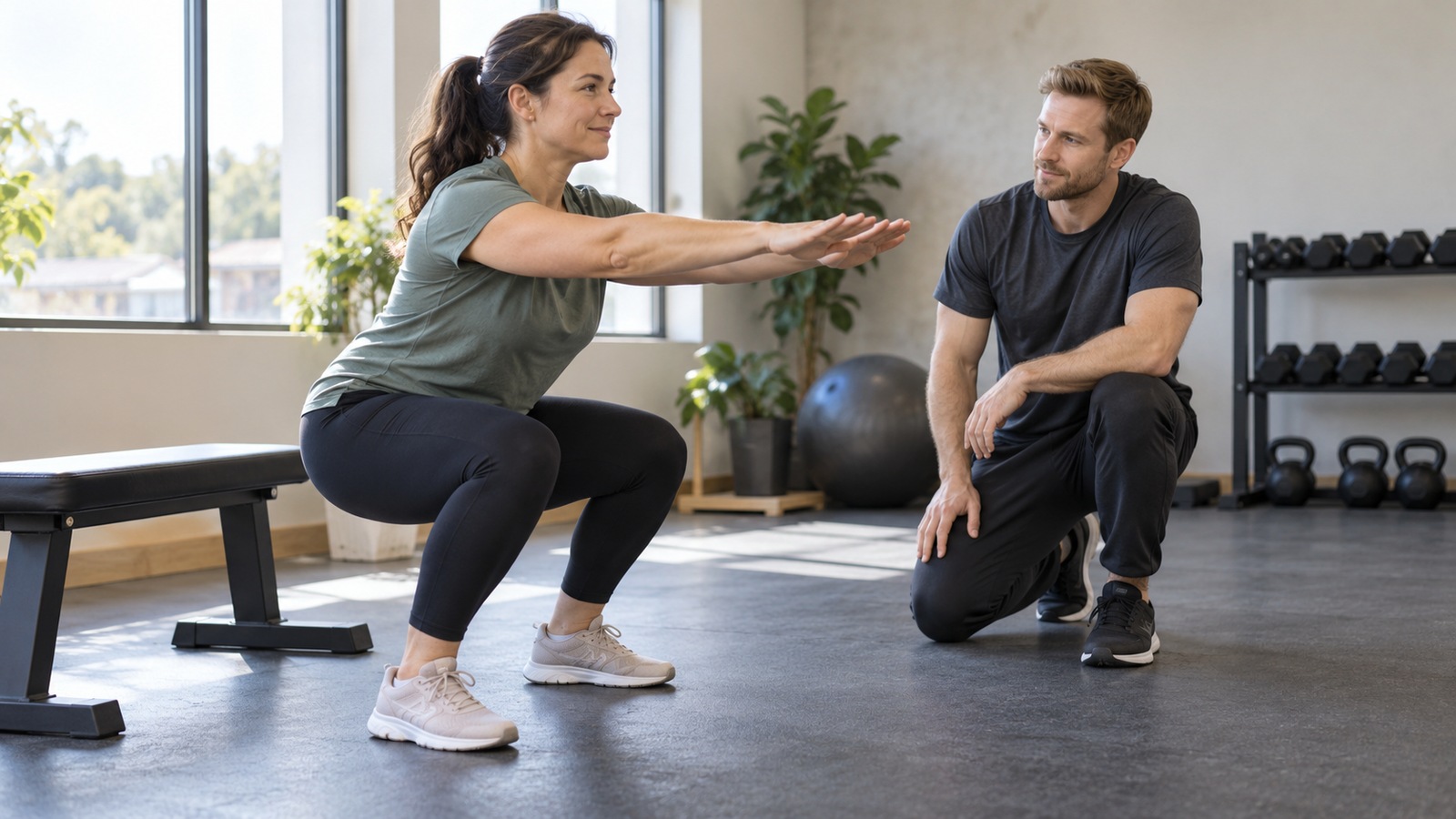
Camera-based feedback, where offered, should be evaluated according to its actual scope. A camera may not see the relevant angle, the whole body, or how a movement feels. It cannot be assumed to identify every unsafe load or explain pain. If you need direct technique assessment, a qualified trainer or relevant clinician may provide information that a generic demonstration or automated cue cannot.
A newcomer may benefit from learning a smaller number of movements well before seeking constant variety. An experienced user may prefer detailed history and easy editing. Accessibility also belongs in the comparison: text size, audio controls, movement alternatives, and interaction during exercise can determine whether a feature is usable. A technically sophisticated app that cannot accommodate your needs is a poor practical fit.
Inspect Progression After an Ordinary Difficult Week
The plan should make sense when life interrupts it. Consider what happens after missed sessions, poor sleep, travel, or a period of reduced activity. Does the system invite you to review the plan, or does it act as though the original schedule remains appropriate? A useful progression model should not depend on perfect attendance or on your reporting every session in an idealized way.
Be honest about the feedback you enter. Recording incomplete sets as complete or labeling a difficult effort as easy can distort future recommendations. At the same time, do not assume the app’s next suggestion must be followed because it used your data. Pause, reduce, or seek guidance when the recommendation conflicts with symptoms, restrictions, or your ability to perform the movement with control.
Compare the Cost of the Whole Routine
Subscription fees are only one part of training cost. Add equipment or gym access needed for the intended sessions, and consider whether another device is required for convenient use. A cheaper program can become expensive if it sends you toward facilities you would not otherwise need. Conversely, an app that works with your existing equipment may provide useful structure without additional purchases.
During a trial, check cancellation terms and whether useful history remains available after membership ends. Keep a basic record of your training in a form you can retain if portability matters to you. Changing apps should not require guessing what you did last month. If a human trainer is also part of the plan, decide which person or system owns progression so you do not follow competing schedules.
Privacy choices are relevant even in a fitness setting. Some services integrate with other platforms, while others request personal measurements or health information. Connect only what serves the training task. Review sharing and deletion controls before assuming that a workout log is an inconsequential category of data, particularly if it reveals routines, locations, or sensitive personal goals.
Use a Trial Session as Your Decision Tool
Run a realistic session during the trial rather than judging only the onboarding questionnaire. Check the match to your equipment, clarity of instructions, ease of recording, and ability to substitute a movement. Then enter honest feedback and inspect what changes next. The comparison becomes much more concrete when you can describe the product’s response to a real constraint.
Keep the app that helps you train consistently with understandable recommendations and an acceptable level of effort, cost, and data sharing. A resistance planner may be the strongest fit for one reader, a running plan for another, and guided sessions for someone else. Your best choice should remain useful on a crowded, rushed, imperfect day. That is a more demanding and meaningful test of personalization than a well-presented workout on a screen.