Buy for the Night You Actually Sleep Through
The sleep tracker that looks most capable on a product page may spend the night on a charger, feel uncomfortable against your pillow, or remain beneath a mattress while you travel. Choosing between a smart ring, a watch, and a bed sensor starts with those ordinary realities. Each format collects indirect evidence about sleep in a different setting, and each turns that evidence into estimates you need to understand. The best choice is the one that provides a useful record with tolerable cost, friction, and uncertainty. Compare the physical format before comparing scores, then check the exact model, software, regional functions, and ownership terms. This approach can prevent a technically impressive purchase from becoming another device that records too few ordinary nights to answer the reason you bought it.
A: No. Compare the specific product, version, method, population, and outcome evaluated. Device format affects practical use, but it does not establish a universal accuracy ranking across duration, stages, or clinical questions.
A: It records from its installed location rather than following your body. Frequent nights elsewhere therefore change how complete that setup can be for your routine, unless you make another appropriate recording arrangement.
A: First test whether its existing functions meet your intended information need. New hardware may offer different comfort or features, but those differences should justify their cost and practical burden for the task you actually want.
A: No. Clinical studies can use a different measurement setup and diagnostic purpose. A consumer estimate may provide context, but its detail or visual polish should not be treated as equivalence to an appropriate clinical assessment.
A: New hardware costs are concentrated at purchase, while memberships and some other expenses continue. Separating those periods helps compare an existing device, a new wearable, and a fixed sensor more fairly.
A: Check recording, synchronization, power, and relevant network conditions before drawing a health conclusion. A late display can be a service issue rather than evidence of an unusual night, and the missing interval should remain uncertain until clarified.
A: Use ordinary nights and usual sleeping positions within the relevant return conditions. Include realistic charging and fit routines, and notice whether discomfort makes you remove the device or spend extra attention managing it.
A: No. Choose according to the task, relevant evidence, compatibility, and current ownership terms. A newer model is useful only if its practical or supported capabilities improve the job enough to justify changing.
A: Consider reducing detail, limiting review, or stepping back from monitoring. The information should support a useful purpose rather than make every night feel like a test, and ongoing distress or sleep difficulty may warrant appropriate support.
A: No. Persistent symptoms, breathing concerns, or daytime impairment can still need appropriate assessment. A general score has a limited scope and should not be used to rule out every sleep problem.
A Ring, a Watch, and a Mattress Sensor Have Different Jobs
| Best fit | Model and hardware price | Ownership boundary |
|---|---|---|
| A ring-centered overnight routine | Oura Ring5, from $399 | Membership is additional; comfort, fit, and consistent wear determine whether the record is usable. |
| Sleep and daytime use in an iPhone ecosystem | Apple Watch Series12, from $399 | Check phone/software compatibility and plan charging around overnight wear. |
| A fixed-bed record without wearing a device | Withings Sleep, $199.95 | The US product page offers an optional Withings+ plan; distinguish it from regional Sleep Analyzer offerings. |
These recommendations follow format and workflow fit, not a new head-to-head accuracy trial. Compare the exact model, feature eligibility, subscription, and return terms at checkout. A device already owned may be the better first trial than any new purchase.
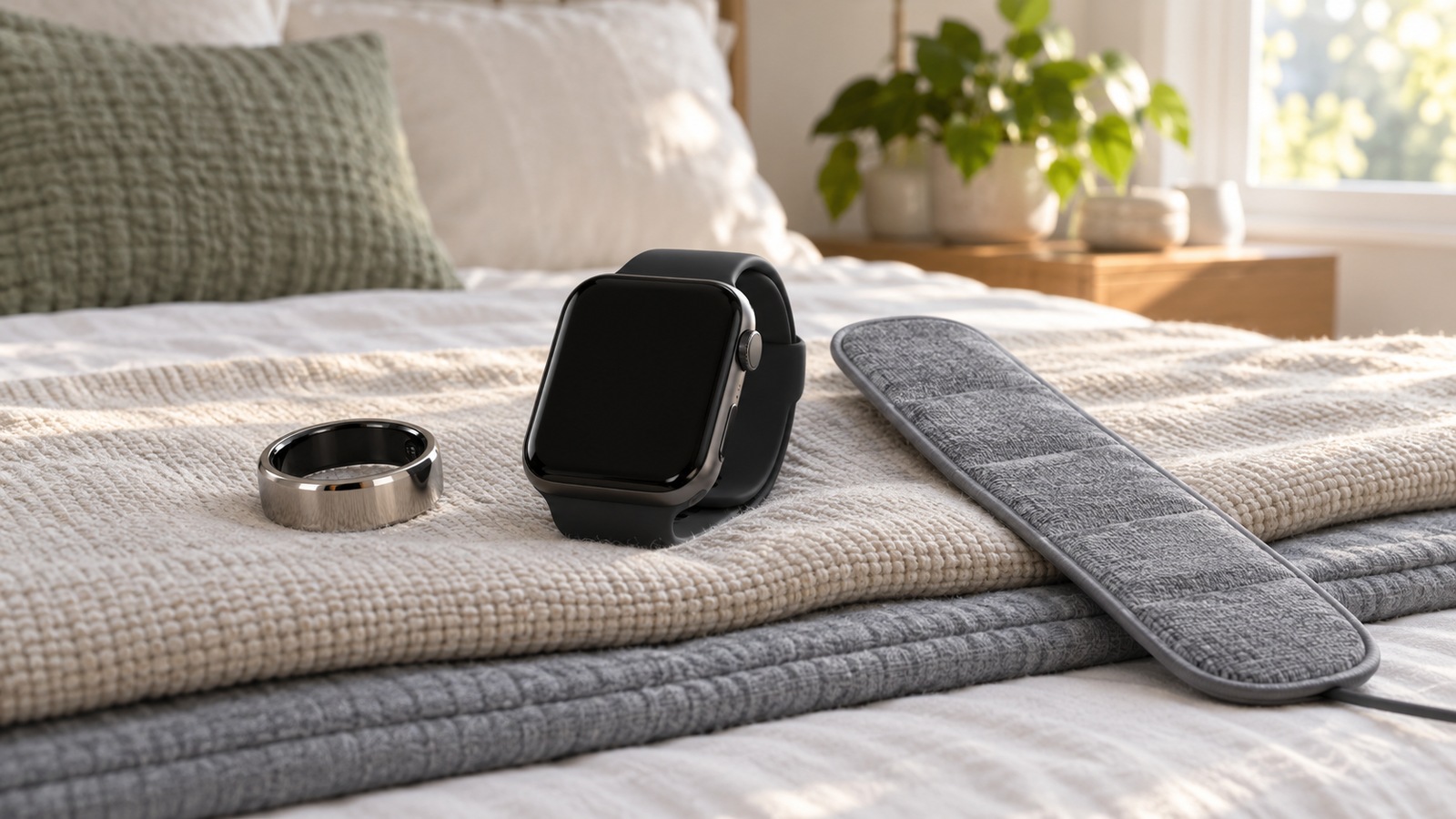
A ring travels with your hand and can offer a relatively unobtrusive way to collect overnight signals. A watch combines sleep functions with a broader wrist-based device that you may already use during the day. A bed sensor remains in the sleeping environment and avoids the need to wear anything. These differences affect completeness and convenience before an algorithm interprets a single reading.
Ask where you usually sleep and what you are comfortable wearing. Someone alternating between homes may value portability, while a person who dislikes overnight wearables may prefer a fixed sensor. Someone who already owns a compatible watch should assess its existing sleep functions before buying another device. A format that fits your routine can be more useful than a marginal feature advantage you rarely use.
What Consumer Devices Estimate About Sleep
Consumer trackers infer sleep from available signals such as movement and cardiovascular or respiratory patterns, depending on the device. They do not all collect the same information or apply the same classification rules. A chart labeled deep sleep can therefore differ between products even when they observe the same night. Treat the displayed stage as an estimate made through a particular measurement and analysis process.
A clinical sleep study has a different purpose and measurement setup. The NHLBI description of sleep studies explains that common studies record brain waves as well as other physiological information. This is why consumer tracking should not automatically be treated as an equivalent diagnostic assessment. A convenient nightly record and a clinical test can both be useful without answering the same question.
Decide which information you actually need. Consistency of timing, a broad duration pattern, or a record to support a conversation may be useful even when stage estimates remain uncertain. More displayed metrics do not necessarily improve that task. An app that explains limitations and missing periods clearly can be preferable to one that supplies a detailed score without showing how incomplete the record is.
Smart Rings Suit Some Overnight Routines
Oura is a relevant example of a ring-centered ecosystem. Its membership guidance lists US access at $5.99 monthly or $69.99 annually, checked October 28, 2026. The ring is a separate purchase, and access after membership ends is more limited. Compare the full ownership arrangement for the exact model and region rather than treating the monthly membership as the entire price.
For any ring, examine fit and the practical return process. Comfort at a desk does not necessarily establish comfort during sleep, and sizing deserves attention before committing. Check charging habits and what happens when the device is removed. If your intended task depends on a continuous pattern, several missing nights can reduce the value of an otherwise attractive overview.
A Watch Can Be the Most Practical Device You Already Own
A compatible Apple Watch can provide sleep information through Apple’s sleep tools, while compatible Garmin watches offer their own monitoring functions. Review Apple’s setup instructions and Garmin’s explanation of advanced sleep monitoring for the relevant ecosystem. Features depend on the exact hardware and software. An existing watch can be a sensible starting point when it already performs the information task you need, provided you can wear it comfortably and keep it charged without losing the nights you want to record.
Under-Mattress Sensors Reduce Wearable Burden
Withings offers region-specific sleep products that sit beneath the mattress. Its US product explanation describes sleep-pattern information synced through Wi-Fi to the app. Check the exact regional product rather than assuming that a feature described for another market is included. Similar names can conceal different available functions and regulatory contexts.
The attraction is straightforward: the sensor can remain in place without a nightly wearable routine. The limitation is equally practical: it stays with the bed. Check mattress compatibility, installation requirements, connectivity, and whether the setup suits a shared bed. If you often sleep elsewhere, decide whether a record from only one location answers your purpose before comparing the resulting scores.
Consider who else may be involved in the environment. Shared bedrooms create questions about what information is collected and whose movements or sounds may affect the setup. Read the product’s actual instructions and information practices. A device that does not touch the skin is not automatically free of privacy considerations or practical sources of measurement uncertainty.
Compare Validation With the Question You Want Answered
A useful accuracy claim identifies the product version, reference method, population, and outcome measured. Agreement about total sleep duration does not establish equally strong agreement about every stage or brief awakening. A result from one device should not be transferred to another merely because both are rings or both use a wrist sensor. Format is a purchasing consideration, not a substitute for device-specific evidence.
Look beyond a single overall percentage. Ask whether performance was tested across the kinds of sleepers relevant to your situation and whether the study describes missing or unusable data. A model can work well on a clean subset while being less useful when fit, movement, or other conditions interfere. Practical completeness belongs alongside numerical agreement when judging a nightly consumer tool.
Also distinguish vendor documentation from independent evaluation. The manufacturer is the primary source for setup and advertised functions, but product descriptions alone do not prove a clinical benefit. If you need a diagnostic answer, ask a qualified clinician what assessment is suitable. Choosing the highest-scoring consumer device in a review does not settle which test is appropriate for a persistent concern.
Published evidence can help narrow the choice, but it cannot tell you whether a ring will bother your hand or a watch will remain on the charger. Use the research to understand the scope of a claim, then use the return window to evaluate everyday feasibility. These are complementary tests. Neither should be presented as resolving everything the other leaves uncertain.
Remember that a difference between devices is not a reliable way to decide which one is correct. Two estimates can disagree because their sensors, definitions, or algorithms differ. Comparing them with each other can reveal inconsistency, but it does not establish a reference standard. If the discrepancy matters to a clinical concern, discuss the underlying problem instead of buying a third tracker simply to break the tie.
Charging and Synchronization Determine Whether a Record Exists
Map a charging opportunity into an ordinary day before purchase. A wearable used all day and all night still needs a practical charging routine, and a plan that works only on weekends may leave gaps during the working week. Check battery expectations for your intended functions rather than assuming every advertised setting has the same demand. Comfort and charging interact when you decide which hours the device can actually be worn.
For a fixed sensor, inspect power and connectivity requirements. Withings explains that data may take time to appear after leaving bed, depending on synchronization conditions. A delayed upload is different from a missing measurement, but the interface needs to make that distinction understandable. Avoid treating an empty morning screen as proof of a health change before checking the basic recording process.
Keep the Cost Comparison Tied to Actual Ownership
Compare the first year separately from later years. Hardware, subscriptions, optional services, replacement accessories, and return costs can change the ranking. A watch already in your drawer may provide a lower-cost trial than new hardware, while a subscription-free feature is useful only if it performs the task you need. Read what remains available after cancellation before depending on a paid ecosystem.
Check current checkout prices for the exact models you are considering. Product generations, finishes, promotions, and regional taxes change, so an old review may not describe today’s purchase. You do not need to choose the newest generation automatically. Establish whether the difference affects your intended use and whether any cited evidence applies to the version actually being sold.
Portability of information deserves attention as well. If you later change devices, can you retain a useful history with dates and context? A large export is not automatically easy to interpret. Try a small sample and determine whether it supports your intended conversation or comparison. Ownership value includes what happens when you stop using the product.
Check whether the purchase locks you into a device-and-phone combination you expect to keep. An otherwise attractive tracker may be less convenient if a planned phone change interrupts its main functions. Look at supported operating systems and current requirements for the model you are buying. Compatibility should be a concrete part of the ownership decision, rather than an assumption borrowed from another member of the same product family.
Use the Return Window to Test Ordinary Nights
Wear or install the candidate under normal conditions rather than saving the trial for an unusually quiet week. Record whether you remove it, forget to charge it, change beds, or find the morning review burdensome. Inspect gaps and setup corrections before comparing wellness scores. The trial should show whether the product can produce a usable record in your life, not merely whether the app can display an attractive sample chart.
Decide in Advance How You Will Use the Information
Define a stopping point for comparison shopping. Once a candidate meets the practical requirements and has evidence appropriate to your task, collecting more metrics may add little. You can make a reasonable choice while acknowledging that consumer measurement remains imperfect. The point of the purchase is a usable contribution to your routine, not the elimination of every uncertainty about a night’s sleep.
Choose a limited review purpose, such as noticing schedule consistency or preparing a concise record for an appointment. Keep your own experience alongside the data. A reassuring estimate should not dismiss persistent sleep difficulty or concerning daytime effects. Conversely, one disappointing stage chart does not establish a diagnosis or require you to change several habits immediately.
For an overnight ring routine, begin with the Oura model and membership together; for an existing compatible iPhone-and-watch routine, first test whether charging leaves a reliable overnight record; for a fixed-bed setup, examine the Withings sensor’s actual placement and household limits. These are format recommendations, not an accuracy podium. Keep a purchase only if the ordinary-night trial supplies the record you intended to use. If the unanswered issue is persistent waking or impaired daytime functioning, another hardware comparison is unlikely to settle it.