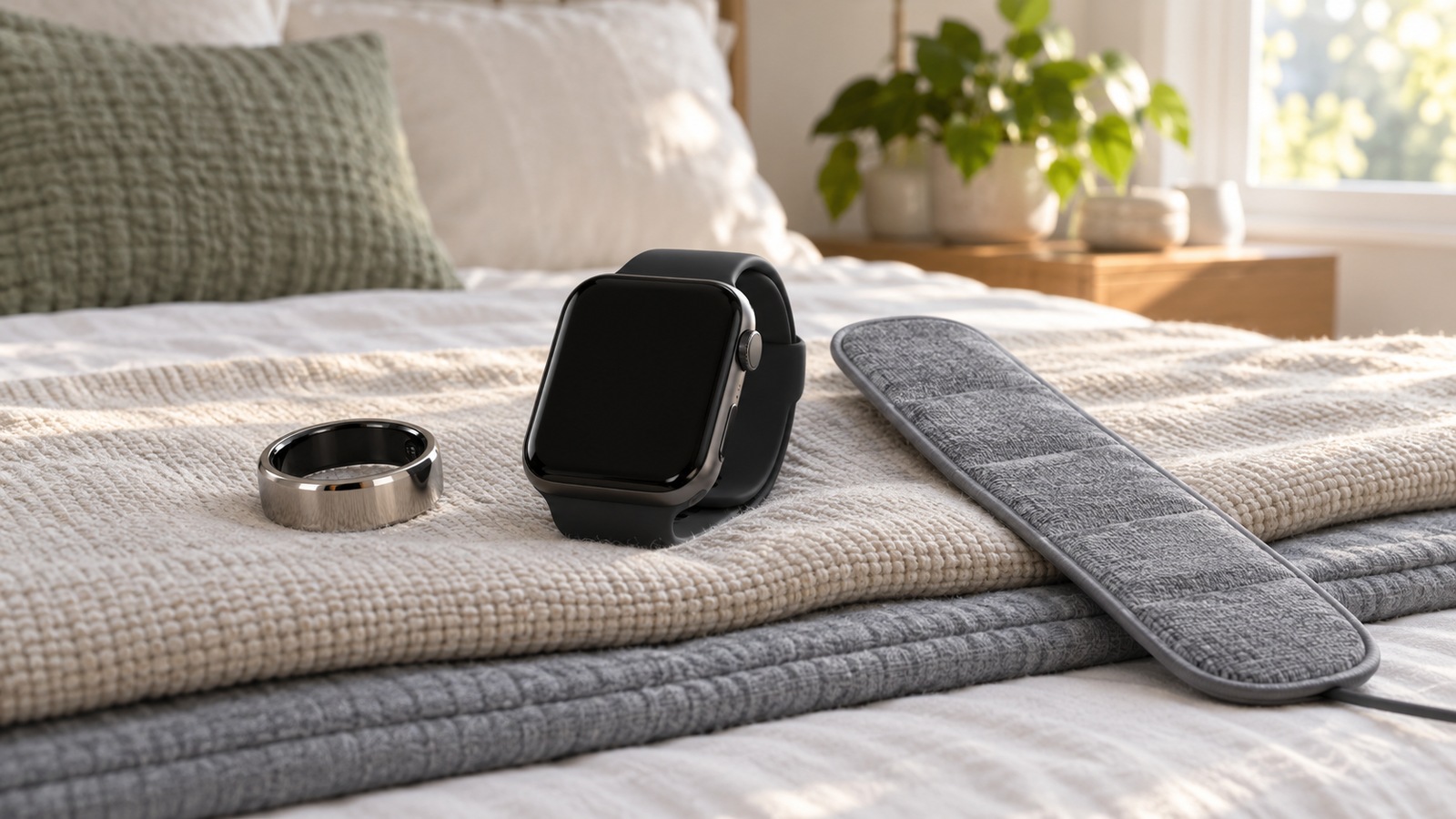
Decide What the Bedtime Phone Is Supposed to Do
You open a sleep app intending to settle down, then spend twenty minutes choosing audio, inspecting a score, or answering a coach. The technology may be adding activity at the very moment you wanted less. Choosing among AI sleep apps begins with a simpler decision: do you need help observing a pattern, relaxing, or accessing an appropriate treatment for a persistent problem? These tasks require different evidence and different levels of engagement. A conversational interpretation of wearable data, a library of soothing audio, and a structured insomnia program should not be ranked as though they provide the same service. Compare what happens before bed, during the night, and the next day, then choose the smallest useful role for software within your actual routine.
A: No. Tracking, relaxation content, and clinical treatment have different purposes, evidence, and access arrangements. Define the job first so a pleasant content service is not judged as a diagnostic tool or mistaken for an individualized treatment program.
A: Not automatically. A chatbot's language does not establish delivery of an evaluated clinical intervention. Examine the actual program, evidence, components, intended use, and suitability arrangements rather than treating any sleep conversation as CBT-I.
A: It provides a relaxation-content benchmark for the task some readers actually need. Comparing it helps determine whether AI interpretation or new hardware adds useful value beyond a straightforward library of sleep stories, music, or meditations.
A: Treat hardware and recurring membership as separate ownership costs when comparing the service. Check the current offer and required access conditions for the model and features you intend to use rather than relying only on a monthly subscription figure.
A: It is a prescription device available on a licensed provider's order for its indicated use. Access, assessment, cost, and oversight depend on the healthcare arrangement, and the product's instructions provide relevant suitability and use information.
A: Consider reducing tracking detail, limiting review, or pausing the method, and seek appropriate support for ongoing difficulties. More measurement is not automatically helpful when the main effect is increased checking or worry.
A: No. A general score should not replace appropriate assessment of a breathing concern or other persistent symptom. Describe the concern to a suitable care professional rather than using the device's broad reassurance to rule it out.
A: That reveals logging, browsing, charging, and control burdens that relaxed daytime setup can hide. The feature needs to work under the conditions in which you will use it, with minimal effort once its task is complete.
A: Collected information or recordings may involve another person as well as your own routine. Review what is captured, displayed, stored, and shared, and consider the other person's privacy before enabling features that include the room.
A: It should perform its chosen role with useful benefit and an acceptable cost and nightly burden. Assess tracking, relaxation, or appropriate treatment on its own terms rather than using time spent in the app as the main measure of success.
Separate Tracking From Relaxation and Treatment
| Need | Conditional choice | Important buying boundary |
|---|---|---|
| A conversation about ring-derived sleep patterns | Oura Advisor | Requires the wearable ecosystem and membership; the ring cost is additional. |
| Guided relaxation content without a data-based coach | Calm, a non-AI benchmark in this shortlist | Compare the actual content tier and regional renewal charge. |
| A structured insomnia treatment discussion | Ask an appropriate clinician about SleepioRx access and suitability. | A clinical service with its own eligibility/access pathway, not an interchangeable relaxation subscription. |
Only the first choice is included here for an explicitly conversational AI function. The other two show when a different kind of support may better match the problem. This is a comparison of roles, not evidence that one app treats every cause of poor sleep. No comparable all-in price is established across all three arrangements.
Tracking attempts to describe aspects of sleep from a diary, sensor, or other input. Relaxation content offers an experience that may help you wind down. Treatment addresses a defined clinical problem through an appropriate therapeutic approach. A product can contain more than one function, but the evidence for one does not automatically apply to the others. A pleasant audio library is not evidence that a tracking algorithm accurately identifies sleep stages.
The same distinction applies to AI. An assistant may summarize patterns or tailor language without providing a clinically validated intervention. A structured digital treatment may be useful without resembling an open-ended chatbot. Ask what the software does and how that function was evaluated. The presence of generated conversation is less important than the suitability of the service for your particular need.
Begin by describing the problem outside the app. Perhaps you want a calmer wind-down, a clearer record for an appointment, or help with persistent difficulty sleeping. If you cannot name the job, an expanding feature list may encourage you to buy several services that overlap. A defined purpose makes the comparison easier and limits the amount of nightly attention the technology demands.
Oura Advisor Is Relevant to Data-Based Conversation
Oura combines ring-based tracking with an app and membership that includes its AI-powered Advisor. Its membership page lists US access at $5.99 monthly or $69.99 annually before tax, checked October 27, 2026; the ring is an additional purchase. See the current membership details. This makes it relevant when your intended task is discussing patterns collected through an existing ring routine.
Evaluate the conversation separately from the measurements beneath it. Does the assistant acknowledge a missing night, a disrupted schedule, or uncertainty in what a score represents? Does it help you prepare a practical observation without turning an estimate into a diagnosis? The useful outcome is an understandable view of a pattern, not a growing obligation to optimize every metric before you can regard a night as acceptable.
Calm Provides a Relaxation Comparison Point
Calm describes a Premium library of guided meditations, Sleep Stories, music, and other content. Its subscription guidance explains how access is purchased, while its 2026 pricing update directs users to current regional plans and renewal amounts. Check the actual checkout rather than relying on a remembered price. Calm is useful here as a comparison for wind-down content, not as proof that every sleep aid needs an AI coach. Test whether familiar audio helps you settle with less interaction, and whether you can start and stop it without turning bedtime into a content-selection session.
SleepioRx Belongs in a Clinical Treatment Discussion
Big Health describes SleepioRx as a prescription device delivering cognitive behavioral therapy for insomnia, available on the order of a licensed healthcare provider. Its official FAQ explains this access model. That places it in a different category from a general wellness subscription or an audio library. Eligibility, suitability, access, and costs should be discussed through the relevant care arrangement.
A randomized trial of the specific digital treatment compared it with online sleep-hygiene education. The published CrEDIT trial is an example of evidence evaluating a defined intervention and comparator. It should not be used to claim that any chatbot using sleep-related language will have the same effects. Keep the clinical evidence connected to the product, population, and treatment process actually studied.
More generally, the NHLBI explains CBT-I as a structured approach commonly recommended first for long-term insomnia. Its components go beyond generic bedtime tips. Do not reproduce an intensive treatment component from a casual chatbot recommendation without appropriate guidance, especially when other health or safety considerations may affect suitability. A clinical program should be evaluated as care rather than selected solely for app convenience.
Tracking Accuracy and Helpful Advice Need Separate Evidence
A tracker can estimate a night’s pattern while still making errors about specific periods or stages. The interpretation layer then adds another set of assumptions. If the assistant suggests that one habit caused a change, ask whether it is describing an association or claiming a tested causal effect. A few nights of data generally contain many overlapping changes in schedule, environment, and behavior.
Compare studies according to what they measured. Agreement with a reference method addresses measurement. A trial of a behavioral intervention addresses the effects of that intervention. User satisfaction addresses the experience of using the product. These findings can all be informative, but they should not be combined into a broad claim that the entire system improves every aspect of sleep.
Choose a Review Routine That Does Not Dominate the Morning
A sleep summary can provide context, but checking it before noticing how you feel can make the number the starting point for the whole day. Decide when you will review the information and what action it can reasonably support. If the main purpose is preparing a record for a clinician, a consistent brief summary may be more useful than repeated inspection of every estimated stage.
Keep your own experience alongside the measurements. Record relevant changes and concerns without forcing them to agree with the score. A reassuring estimate should not dismiss persistent difficulties, and a disappointing number does not automatically establish that the night was medically abnormal. The record should make a conversation clearer rather than settle every uncertainty before that conversation occurs.
Some people find detailed tracking increasingly stressful. If reviewing data leads to repeated checking, bedtime pressure, or attempts to control every variable, consider reducing the detail or stepping back from the tool. A useful sleep app should support your wellbeing outside its interface. More engagement is not a sensible goal when the engagement itself is becoming part of the problem.
Assess the Nightly Burden Before Buying
Check what the product requires at bedtime. Does a device need charging, a diary need completing, a phone need positioning, or an internet connection need to remain active? These tasks may be manageable, but they belong in the comparison. A feature you cannot use consistently under normal conditions is less valuable than its promotional description suggests.
Test the interaction when you are tired rather than only when browsing during the day. Examine whether controls are easy to use, audio continues as expected, and the app invites unnecessary browsing. For shared bedrooms, consider sound, light, and the other person’s preferences. The best setup is one that can fade into the routine instead of requiring repeated attention.
Keep Symptoms Connected to Appropriate Assessment
Persistent sleep difficulty, substantial daytime impairment, or concerns about breathing during sleep deserve appropriate clinical attention. An app may help document timing or observations, but it should not be used to rule out a condition from a general score. Do not keep trying different subscriptions when the central need is assessment. Bring a concise record and describe the problem in your own words as well as sharing device outputs.
Compare the Full Cost of the Intended Service
A tracker-based assistant can involve hardware plus membership, while an audio service may charge only for content access. A prescription digital treatment may have a different access and reimbursement pathway altogether. Compare the service you will actually receive, not just the monthly number displayed in an advertisement. If hardware is required, include the first-year purchase separately from later recurring costs.
Review renewal terms, trial eligibility, cancellation, and the availability of useful records after access ends. Check whether an existing employer, healthcare arrangement, or current subscription already provides an appropriate service. Coverage and eligibility vary, so confirm your own terms rather than assuming the product’s general access page applies to you. A price comparison should not imply that clinical care and a sound library are substitutes merely because both appear on a phone.
Consider the cost of attention too. A product that asks for nightly input and frequent review may be more burdensome than a simpler alternative. This burden can be reasonable if it supports an appropriate treatment or a useful task. It is harder to justify when it produces more scores and conversations without improving the problem you set out to address.
Check whether a subscription adds a feature you will use or simply unlocks more interpretation of data you already have. An expanded report can be interesting without changing the next sensible action. If the same practical routine would follow either way, that is relevant to the purchase decision. Spend according to the help you need, and reconsider services whose growing complexity no longer serves that purpose.
Review Data and Bedroom Privacy
Sleep information can reveal routines, work schedules, and sensitive concerns. Depending on the product, inputs may include a diary, sensor data, recordings, or information shared with an assistant. Find out what is collected and retained rather than assuming every sleep app uses the same method. Give particular thought to information involving another person who shares the room.
Check optional integrations and account controls before creating a long history. The convenience of combining health records and sleep data should be weighed against the amount of sensitive information held in one service. Keep exports you genuinely need and avoid treating an app as the only home for information relevant to care. Choose a level of collection that serves the task.
Run a Trial With a Clear Stopping Point
For a general wellness app, choose a practical trial goal such as reducing bedtime browsing or preparing an understandable sleep summary. Establish how much nightly interaction you are willing to tolerate. Compare the result with a simpler routine you could maintain without the subscription. Keep clinical treatment decisions and prescribed program use connected to the relevant professional guidance rather than treating them as an informal app experiment.
At the review point, ask whether the tool performed its intended job. A relaxation library should make content easy to use without excessive selection. A tracking assistant should help you interpret limitations as well as patterns. An appropriate treatment program should be evaluated according to its care plan and relevant outcomes, not the entertainment value of its interface.
Choose Oura’s conversational layer to discuss a compatible tracking record, a content service when the desired help is a familiar relaxation practice, and an appropriate clinical conversation when insomnia treatment is the issue. These choices have different access routes and evidence requirements. Someone who already owns a ring faces a different first-year commitment from a new buyer, while a clinical service cannot be priced as though it were merely another content subscription. The comparison should end with one suitable route, not three overlapping purchases.