A Photograph Records Appearance, Not the Whole Recipe
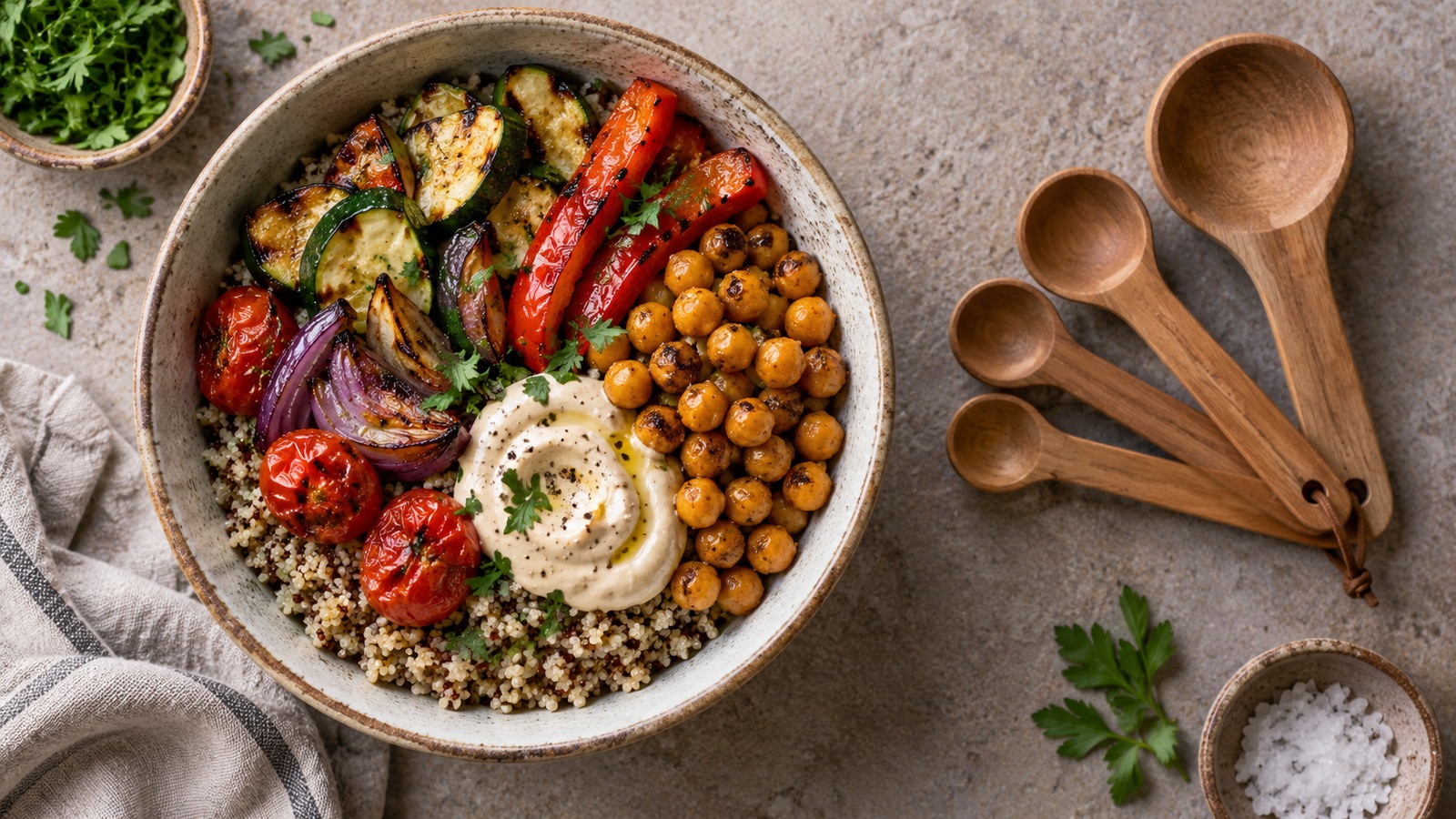
A restaurant grain bowl looks easy to log: vegetables, a base, something grilled, and a sauce. Yet the photograph does not reveal how much oil went into cooking, what is beneath the top layer, or whether the sauce contains yogurt, cream, or a different ingredient. AI calorie counters can make food logging faster by suggesting likely foods and amounts, but recognition is only the beginning of the estimate. Accuracy depends on the food identified, the portion assigned, the recipe assumed, and the database entry used. A useful photo log therefore remains something to review. Understanding where uncertainty enters lets you correct the important parts without treating every meal as a laboratory exercise or allowing a precise-looking number to imply more certainty than the image supports.
A: No. Oil can be absorbed or visually hidden, and the image may not establish how much was used. Add relevant preparation information when known rather than assuming a recognized dish includes every ingredient accurately.
A: No. The amount, preparation, additions, and database entry still matter. Correct recognition of the main food can coexist with a substantial error elsewhere in the estimation chain.
A: Angle, depth, framing, recognition, and assumed quantities can differ. The system may also select a different recipe or serving unit. Inspect the components rather than treating either displayed total as automatically more authoritative.
A: No. Studies may evaluate different tasks, foods, versions, reference methods, and correction workflows. Compare like with like and keep the conclusion within the actual conditions tested instead of using one percentage as a universal ranking.
A: Usually that would hide rather than resolve meal-specific errors. A missing sauce, wrong food, and incorrect portion do not necessarily produce the same direction or size of mistake. Review the relevant assumptions instead.
A: Try familiar meals with reasonably known ingredients and quantities, then compare the components and final record. Include mixed dishes as well as simple items, and measure the effort needed to produce a useful entry.
A: No. Appearance cannot establish all ingredients or preparation conditions, including cross-contact. Use appropriate labels, supplier information, and relevant professional guidance rather than treating recognition output as an allergy-safety assessment.
A: No. The useful method depends on available information and correction burden. A checked label or saved recipe may provide a clearer record than a photograph requiring several uncertain guesses.
A: Inspect the foods, amounts, units, and recipe assumptions behind it. A number with decimal places can still rest on uncertain inputs; display precision should not be interpreted as proof of measurement accuracy.
A: Reconsider it when the method fails the recording purpose, requires excessive correction, creates privacy problems, or contributes to distress. Another logging route or a different approach to the underlying goal may be more appropriate.
Four Estimates Sit Between the Image and the Total
Consider an invented lunch estimate of 500 calories. The recognized main ingredients may be correct, yet a missed 100-calorie ingredient and a portion underestimated by 150 calories would make the corrected total 750. That is a 250-calorie shortfall, or one-third of the corrected total. These are illustrative numbers, not a reported error rate for any app. The example separates recognition from quantity and recipe information: naming rice correctly does not establish its portion, and seeing a salad does not reveal every dressing ingredient. To compare tools, give them the same meal and record what you had to correct. A confident food label answers only the first part of the estimation problem.
First, the system identifies food categories. It then estimates an amount, matches the result to nutrition information, and combines the entries into a total. An error at any stage can change the final number. A tool may correctly recognize a food while assigning the wrong portion, or estimate a plausible amount while selecting a recipe unlike the one you ate.
The interface may compress these steps into a single response. That convenience makes it easy to miss which assumptions are carrying the estimate. Look for editable ingredients and quantities rather than only a total. A product that lets you inspect and correct the components provides a more useful logging workflow than one that produces an unexplained number with no practical route to revision.
Recognizing a Dish Does Not Identify Its Ingredients
Many meals have similar appearances despite different recipes. A blended soup can conceal several ingredients, a sauce can change substantially between restaurants, and a mixed dish may have components hidden beneath the surface. The system can suggest a likely match based on patterns it has learned. It cannot recover information that the photograph never captured with guaranteed accuracy.
Describe important ingredients when you know them. A short clarification about cooking method or sauce can be more useful than taking repeated photographs from nearly identical angles. When you do not know the recipe, keep that uncertainty visible. Selecting a highly specific database dish simply because the name looks familiar can create a false sense that the hidden ingredients have been resolved.
This limitation also applies to nutrition concerns beyond calories. A photograph cannot establish that a meal is free from an allergen or confirm every ingredient needed for a clinical dietary decision. Use appropriate ingredient information and professional guidance for those needs. The convenience of a logging feature should not extend its role into food-safety or treatment judgments it cannot reliably make.
Portion Size Is a Separate Visual Problem
A large bowl may contain a shallow serving, while a small bowl can hold a dense portion. Camera angle, distance, depth, and the shape of the food affect what the image conveys. A two-dimensional picture does not automatically provide a reliable scale for mass or volume. Even when a model recognizes the ingredient correctly, estimating its amount remains a distinct source of uncertainty. Published research on image-based dietary assessment treats portion estimation as a measurement problem, not merely a naming task. See the randomized laboratory evaluation of PortionSize and MyFitnessPal for an example of how a particular method and comparison can be studied; its findings should not be generalized to every current photo-logging product.
Cooking Adds Information the Camera May Never See
Oil, dressings, spreads, and cooking ingredients can be partly absorbed or mixed into a dish. Their presence may not be obvious in the final picture. A bowl of vegetables prepared with one method can differ from a visually similar bowl prepared another way. The photo estimate necessarily relies on assumptions unless you provide additional information or select a matching recipe.
Home cooking offers an opportunity to improve the record without demanding perfect measurement at every meal. If you make a familiar recipe repeatedly, save an entry that reflects the ingredients and quantities you actually use. Review it when the recipe changes. That can be more dependable and faster than asking the image system to rediscover the same hidden ingredients each time.
Check Whether the App Suggests or Measures
Read the product instructions closely. MyFitnessPal’s Meal Scan guidance describes taking a photo, choosing suggested foods, and adjusting serving size or the number of servings. The user’s review is part of the workflow. A camera input should not be interpreted as an independently verified measurement of everything on the plate.
Cronometer’s photo-logging instructions similarly describe matched foods that can be reviewed and changed before logging. Test how the editing works rather than judging the feature from the first attractive result. If a key ingredient is absent, a good correction route matters more than the speed with which the initial suggestion appeared.
Availability also varies by product version, platform, plan, and region. Check the current documentation before subscribing for a photo feature. If you are comparing products, use the same familiar meals and the same review standard. Differences in your own corrections can otherwise be mistaken for differences in the underlying image recognition.
There Is No Universal Accuracy Percentage
An accuracy claim needs a definition. It might concern food recognition, estimated mass, energy intake, or the proportion of meals falling within a chosen error range. Those measures are not interchangeable. A product that identifies most visible ingredients correctly can still produce a poor total if its portion estimates are off.
The test setting matters too. Controlled meals with known recipes and clear photographs may be easier than restaurant meals photographed quickly under uneven light. Research participants may receive instructions or correction opportunities that ordinary users ignore. Ask which method was tested, what reference measurements were used, and whether the reported number includes human review.
Average error can also conceal differences between meals. Overestimates and underestimates may partly cancel when summarized across a dataset while remaining important for an individual meal. A strong report describes variation and the kinds of foods that were difficult. Do not assume that a successful scan of a simple breakfast establishes equal reliability for a layered casserole or an unfamiliar mixed dish.
Product changes introduce another limit. A study of one version does not automatically validate a later feature or a different company’s implementation. Keep claims attached to the specific tool and workflow evaluated. The most useful purchasing question is how the current feature performs on your meals after the review you are prepared to do.
Calibrate With Meals Whose Details You Know
Try the feature on a few ordinary meals with reasonably known ingredients and amounts. Compare its suggestions with the information you have rather than with another unverified app estimate. Inspect food identity and quantity separately. This can reveal a recurring tendency, such as selecting a different preparation or assigning a standard amount regardless of your actual serving.
The purpose is to learn where your review is needed, not to establish a universal correction factor. Multiplying every estimate by the same percentage assumes that errors behave consistently across foods and situations. They may not. Correct the relevant component when you can, and retain a sensible degree of uncertainty when the missing information cannot be recovered.
Spend Correction Effort Where It Improves the Record
Start with obvious mismatches, omitted components, and implausible portions. Check whether a beverage, dressing, side dish, or second serving was left out of the image. The recorded meal should reflect what you consumed, not merely what happened to be visible when you took the photo. A correct picture of an incomplete plate still produces an incomplete account.
Next, inspect units and preparation state. An entry for a cooked food may not correspond to the same weight of its raw form. A selected serving might refer to a package portion rather than your actual amount. The NIDDK explanation of portions and serving sizes provides useful context for understanding why these quantities should not be treated as automatically identical.
Do not turn every uncertainty into a prolonged search for a perfect number. The appropriate effort depends on why you are keeping the record. A general habit review may need a different level of detail from a task arranged through clinical nutrition care. If numerical logging creates distress or repeated checking, reconsider the method and seek suitable support rather than assuming more precision is always better.
Use Other Input Methods When They Fit Better
Choose the input that supplies the missing information. A packaged food may be easier to enter from its label or supported barcode. A repeated homemade meal may deserve a saved recipe with checked quantities. A restaurant dish may remain uncertain even after manual entry because the recipe is unavailable. These methods complement photographs rather than certify them. In the invented 500-to-750-calorie example, the important correction is the overlooked ingredient and portion, not merely replacing an image with a typed dish name.
Compare corrections across several occasions before deciding a feature is dependable for your routine. One successful recognition may reflect a particularly clear image or a familiar food. A repeatable pattern of manageable review is more informative than a single impressive result. Keep the comparison practical: the useful question is whether the tool helps you make a sufficiently understandable record, with less effort than the alternatives available to you.
When sharing a log, explain how it was created. A clinician or dietitian may interpret a measured recipe record differently from an uncorrected photograph estimate. Naming the method makes its limits easier to discuss. You do not need to present every entry with false precision to make the broader record useful.
A barcode, a food label, a saved recipe, or a manual entry can be more convenient for a particular meal. These methods have their own limits, but they may provide information the picture lacks. Choose according to the available evidence rather than insisting that every item enter through the camera. A mixed workflow can reduce correction work.
For repeated foods, review the saved record periodically so an old error does not become a permanent convenience. For restaurant meals with limited information, acknowledge the estimate rather than presenting it as a measured fact. Consistent documentation of what you know and what you guessed can make a record easier to interpret later.
Keep Photo Logging in Proportion to Its Purpose
AI photo counters can help people capture meals they would otherwise forget or find too tedious to enter. That practical benefit does not require claiming laboratory accuracy. The useful standard is whether the reviewed record serves your chosen purpose with a manageable burden. Evaluate the whole process, including the corrections, rather than only the instant response.
Protect the context around the photograph too. An image may contain other people, location clues, or private details beyond the food. Review the service’s information practices and avoid capturing unnecessary background. A convenience feature should not encourage you to share more than the task requires.
When you look at the final total, remember the chain behind it: recognition, portion estimation, recipe assumptions, and database matching. Correct what you can verify, use other methods where they work better, and leave genuine uncertainty visible. The photograph is a useful starting record of a meal. It becomes a more meaningful nutrition log through the information and judgment added afterward.